
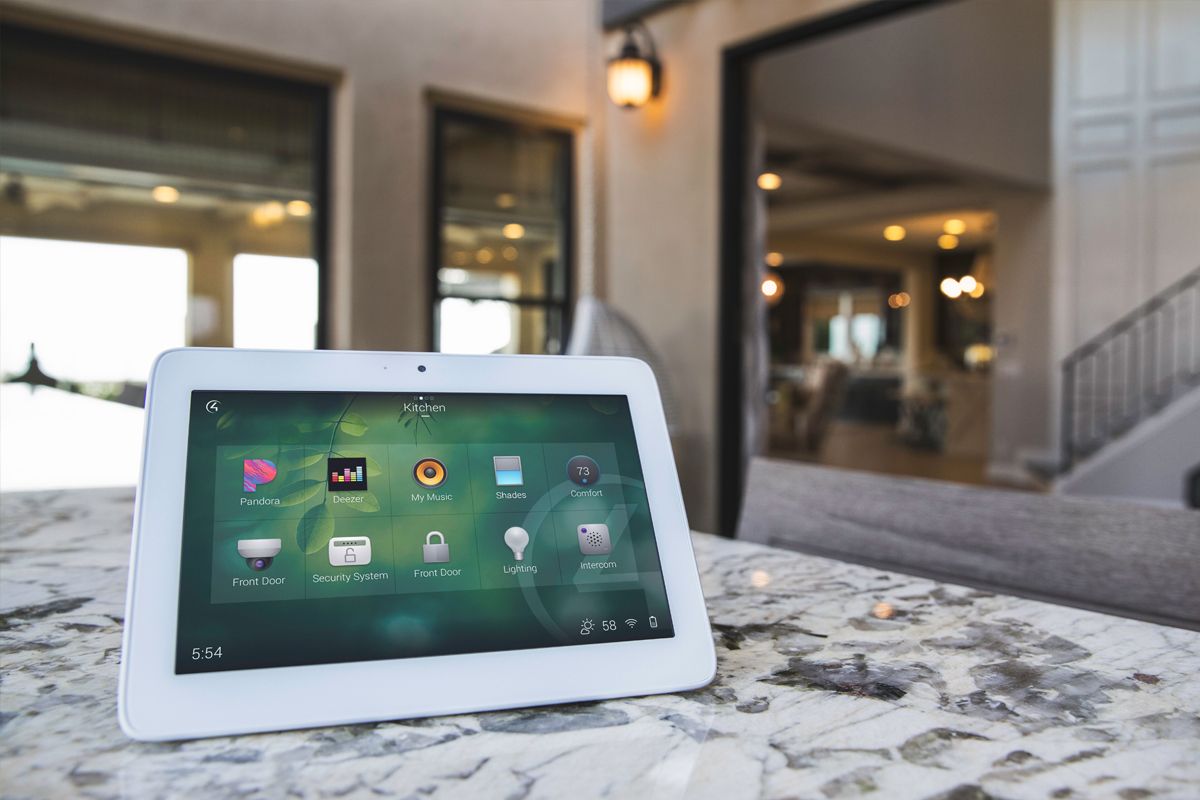
A well-designed backyard audio system lets you enjoy clear, balanced music throughout your outdoor space without disturbing your neighbors or overpowering one seating area.
However, installing outdoor speakers involves more than mounting two speakers on the back of the house. Speaker location, landscape design, property size, wiring, amplifier power, weather exposure, and system control all affect performance.
At Armtech Services, we design and install customized backyard for homes throughout Los Angeles and surrounding areas. Whether you want background music around a patio or powerful entertainment throughout a large backyard, proper planning is essential.
What Is a Backyard Audio System?
A backyard audio system is a permanently installed group of weather-resistant speakers designed to distribute sound across patios, pools, gardens, outdoor kitchens, and other exterior living spaces.
Depending on the property, an outdoor audio system may include:
- Surface-mounted patio speakers
- Landscape speakers
- Rock-style speakers
- Bollard speakers
- In-ground or surface-mounted subwoofers
- Multi-channel amplifiers
- Outdoor-rated speaker wiring
- Streaming audio equipment
- Volume controls
- Smart-home integration
- Multiple independently controlled audio zones
The goal is to produce consistent sound throughout the listening area while keeping the equipment protected and easy to control.
Why Speaker Placement Matters
Outdoor areas do not have walls and ceilings to contain and reflect sound. The sound disperses more freely, making speaker placement especially important.
Installing only one or two powerful speakers often creates an uneven experience. The music may be too loud near the house but difficult to hear across the yard. Increasing the volume can also send unnecessary sound toward neighboring properties.
A better design typically uses several speakers positioned closer to the listeners. Each speaker can operate at a moderate level while the entire system delivers more uniform coverage.
This approach provides:
- More consistent sound
- Clearer music at lower volume
- Better coverage across large areas
- Less disturbance for neighbors
- Improved stereo balance
- More comfortable listening near the speakers
How Many Outdoor Speakers Do You Need?
The correct number of speakers depends on more than the backyard’s square footage. The layout and how each area will be used are equally important.
Consider the following:
- Patio size and shape
- Pool location
- Outdoor kitchen or barbecue area
- Dining and conversation areas
- Gardens and landscaping
- Property boundaries
- Speaker mounting locations
- Desired listening volume
- Background music versus party-level sound
- Noise sensitivity of neighboring properties
A small covered patio may only require one pair of speakers. A larger property with a pool, outdoor kitchen, lawn, and multiple seating areas may need several speaker pairs, one or more subwoofers, and separate audio zones.
More speakers do not automatically mean better results. The system must also have suitable amplification, wiring, configuration, and volume control.
The Best Placement for Patio Speakers
Surface-mounted patio speakers are commonly attached beneath eaves, patio covers, pergolas, or exterior walls.
For better performance:
- Direct the speakers toward the property, not toward neighboring homes.
- Position them near the main listening area.
- Avoid placing both speakers too far apart.
- Mount them high enough to distribute sound without aiming directly into people’s ears.
- Keep the left and right speakers reasonably balanced around the seating area.
- Avoid locations where doors, trees, columns, or furniture will block the sound.
- Use the manufacturer’s mounting hardware and installation requirements.
Installing speakers directly on the house and pointing them outward may seem logical, but it can push the sound across the entire property. Speakers placed closer to the listening areas and aimed back toward the home usually offer better control.
Landscape Speaker Placement
Landscape speakers are designed to blend into gardens, planters, and other outdoor areas. Many models resemble small directional fixtures and can be installed close to the ground.
Instead of trying to cover the entire backyard with two loud speakers, multiple landscape speakers can be distributed around the property.
A carefully planned landscape system should:
- Position speakers at relatively consistent intervals
- Aim speakers toward the primary listening areas
- Keep sound directed inside the property
- Avoid firing speakers directly at one another
- Minimize obstructions from plants and outdoor structures
- Preserve a visually clean landscape
- Provide service access for future maintenance
Landscaping changes over time. Plants that are small during installation may eventually block a speaker. Speaker locations should account for future plant growth, irrigation, lawn maintenance, and drainage.
Do You Need an Outdoor Subwoofer?
Standard outdoor speakers may provide clear vocals and high-frequency detail, but they often cannot reproduce deep bass effectively. An outdoor subwoofer adds the low-frequency performance that makes music sound fuller and more natural.
A subwoofer can be especially valuable for:
- Larger backyards
- Pool areas
- Outdoor parties
- Dance and electronic music
- Systems that use compact landscape speakers
- Homeowners who want a richer listening experience
Outdoor subwoofers are available in several designs, including partially buried models, in-ground units, and decorative enclosures.
Subwoofer placement should be selected carefully. Too much bass near a property boundary can disturb neighbors, while improper placement may produce strong bass in one location and weak performance elsewhere.
The amplifier and system configuration must also include the correct crossover settings so the main speakers and subwoofer work together.
Creating Multiple Outdoor Audio Zones
A large backyard often contains several distinct spaces. The patio may be used for dining, the pool for recreation, and an outdoor kitchen for entertaining.
Placing the entire backyard on one volume control can be inconvenient. The pool area may need more volume than the dining table, while another part of the yard may not need music at all.
Separate audio zones can provide independent control for areas such as:
- Covered patio
- Pool and spa
- Outdoor kitchen
- Dining area
- Garden or lawn
- Guest house
- Front yard or entry
- Rooftop deck
Each zone may require its own amplifier channels, wiring, speaker configuration, and control options. Proper planning during construction or remodeling can make future expansion easier.
Choosing the Right Outdoor Speakers
Not every speaker is suitable for permanent exterior installation. Outdoor speakers must be selected for the environment in which they will operate.
Important considerations include:
Weather resistance
The speakers should be rated for outdoor exposure. A protected patio and an exposed garden may require different types of equipment.
Coastal conditions
Homes near Malibu and other coastal areas may experience salt air, humidity, and corrosion. Equipment, connectors, mounting hardware, and installation methods should be chosen for the property’s actual exposure.
Sound coverage
Some speakers provide broad coverage, while others produce a more focused listening area. Coverage characteristics should match the layout.
Appearance
Outdoor speakers are available in several colors, shapes, and installation styles. They should complement the landscaping and architecture without sacrificing performance.
Power handling
The speakers and amplifier must be properly matched. More wattage does not automatically produce better audio, and an incorrectly configured system can damage equipment.
Amplifiers and System Configuration
The amplifier powers the speakers and plays a major role in system performance. It must be selected according to the number of speakers, speaker impedance, wiring configuration, desired volume, and number of audio zones.
Outdoor audio systems may use:
- A traditional stereo amplifier
- A streaming amplifier
- A multi-zone distribution amplifier
- A dedicated landscape audio amplifier
- A centralized smart-home audio system
- A 70-volt amplifier for certain larger installations
The correct option depends on the property and the system’s intended use.
Connecting too many speakers to an amplifier without calculating the load can cause overheating, protection-mode shutdowns, distorted audio, or equipment damage. This is one reason professional system design matters.
Standard Low-Impedance vs. 70-Volt Systems
Residential outdoor audio systems generally use either standard low-impedance speakers or a 70-volt distributed audio configuration.
Standard low-impedance systems
These systems are common for smaller patios and residential listening areas. They can deliver excellent sound quality but require careful attention to the number of speakers and the amplifier’s supported load.
70-volt systems
A 70-volt system can be useful when many speakers must operate over longer cable distances. Each compatible speaker uses a transformer tap that determines how much amplifier power it receives.
This approach is often used for large residential properties and commercial outdoor spaces. However, a 70-volt system is not automatically the right choice for every backyard. Equipment selection should be based on the layout, required sound quality, cable distance, and number of speakers.
Outdoor Speaker Wiring
The wiring is the hidden foundation of a reliable backyard audio system.
Use cable that is appropriate for the installation environment. Depending on the cable path, this may include:
- Outdoor-rated speaker cable
- Direct-burial cable
- Conduit
- Weather-resistant junctions
- Waterproof or water-resistant connectors
- Properly sealed wall penetrations
Low-voltage cable should be protected from irrigation equipment, landscaping tools, standing water, rodents, excessive heat, and accidental damage.
For a new construction or major backyard renovation, install the necessary wiring and conduit before hardscape, concrete, tile, artificial turf, or finished landscaping is completed. Running additional cable later can be considerably more difficult and expensive.
It is also smart to install extra conduit or wiring for possible future speakers, subwoofers, outdoor televisions, Wi-Fi access points, cameras, and lighting control.
Wi-Fi and Network Requirements
Many modern outdoor audio systems use mobile apps and streaming services. Even when the speakers are wired, the system’s controls and music sources may depend on a reliable network connection.
Poor backyard Wi-Fi can cause:
- Delayed volume control
- Music interruptions
- Missing devices in the control app
- Streaming problems
- Slow response from smart-home scenes
- Difficulty controlling the system near the pool or patio
A professional network design may include an appropriately positioned indoor or outdoor wireless access point. Simply adding an inexpensive Wi-Fi extender does not always provide reliable roaming or consistent performance.
Controlling Your Backyard Audio System
An outdoor audio system can be controlled in several ways:
- Smartphone or tablet
- Handheld remote
- Outdoor volume control
- Touchscreen
- Voice assistant
- Control4 interface
- Scheduled automation
- Custom smart-home scenes
For example, an “Outdoor Entertainment” scene could turn on the patio audio, select a preferred music source, adjust the volume, activate landscape lighting, and prepare the outdoor television.
The system should remain simple enough for family members and guests to use without requiring complicated instructions.
Integrating Outdoor Audio with Control4
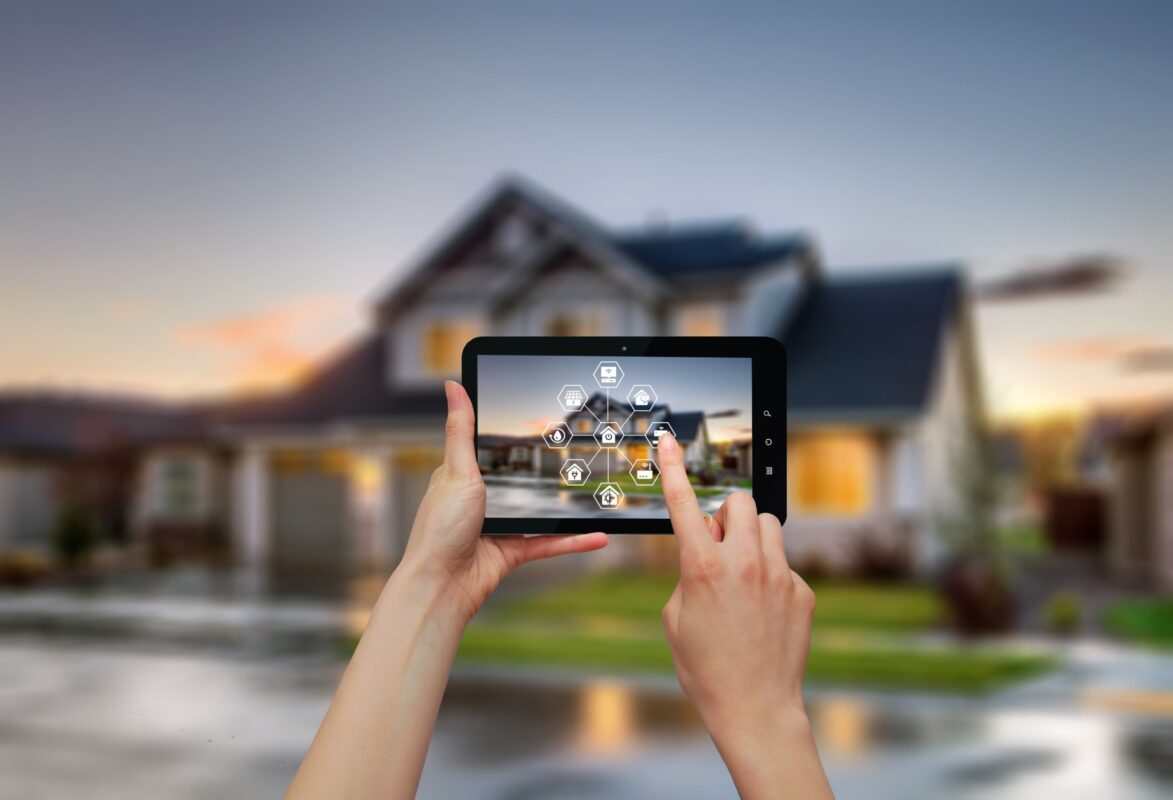
Control4 can bring outdoor audio together with other home systems through a single interface.
Depending on the equipment and programming, homeowners may be able to control:
- Music sources
- Individual audio zones
- Outdoor televisions
- Landscape lighting
- Pool and spa functions
- Security cameras
- Gates and access control
- Motorized shades
- Climate systems
Compatibility must be confirmed before installation. Not every consumer audio product or smart device offers the same integration capabilities.
Common Backyard Audio Mistakes
Avoid these frequent design and installation problems:
Using too few speakers
Two extremely loud speakers rarely provide even coverage across a large backyard.
Pointing sound toward neighbors
Speaker direction should keep as much sound as possible within the property.
Ignoring the subwoofer
Small landscape speakers may sound thin without low-frequency support.
Using indoor equipment outdoors
Indoor speakers, connectors, and wiring may not withstand exterior conditions.
Underestimating the amplifier
The amplifier must support the complete speaker load and desired number of zones.
Installing cable without protection
Exposed or poorly buried wire can be damaged by landscaping, irrigation, weather, and animals.
Forgetting about Wi-Fi
Streaming and app control require reliable network coverage in the areas where the system will be used.
Planning after construction is complete
Wiring becomes more difficult after concrete, finished ceilings, outdoor kitchens, and landscaping are installed.
Professional Installation vs. DIY
A basic pair of patio speakers may be manageable for some homeowners. Larger systems require more detailed planning.
Professional installation is especially valuable when a project includes:
- Multiple audio zones
- Numerous landscape speakers
- Outdoor subwoofers
- Long cable distances
- Control4 integration
- Centralized equipment racks
- Underground wiring or conduit
- Outdoor Wi-Fi
- Pool and landscape coordination
- Integration with lighting, televisions, or security
A professional installer can calculate the speaker load, select the correct amplifier, plan cable routes, configure the system, test coverage, and make final adjustments after installation.
How Much Does a Backyard Audio System Cost?
Backyard audio system pricing depends on:
- Number and type of speakers
- Addition of one or more subwoofers
- Property size
- Number of audio zones
- Amplifier requirements
- Cable distance and accessibility
- Conduit or trenching
- Equipment location
- Network upgrades
- Smart-home integration
- Programming and calibration
- Existing construction versus new construction
A simple patio system and a complete multi-zone landscape system are very different projects. A site evaluation is the most reliable way to develop an accurate design and estimate.
Be cautious with low estimates based only on the number of speakers. Wiring access, amplification, networking, construction conditions, and control requirements can significantly affect the completed cost.
Planning a Backyard Audio System in Los Angeles
Los Angeles properties vary widely, from compact patios to large hillside and coastal estates. A successful outdoor audio design should consider the home’s architecture, outdoor activities, landscaping, nearby properties, and environmental exposure.
Armtech Services can coordinate with homeowners, builders, electricians, pool contractors, landscape designers, and other trades to plan the system before construction is completed.
Our outdoor technology services can include:
- Patio and landscape speakers
- Outdoor subwoofers
- Multi-zone amplification
- Outdoor televisions
- Control4 programming
- Wi-Fi and network installation
- Security cameras
- Landscape lighting control
- Low-voltage prewiring
- Equipment-rack installation
- System upgrades and troubleshooting
Frequently Asked Questions
Can outdoor speakers stay outside all year?
Speakers specifically designed and rated for outdoor use can remain permanently installed. Their durability depends on product quality, installation, environmental exposure, drainage, and maintenance.
How far apart should backyard speakers be?
There is no universal distance that works for every product or property. Spacing depends on the speaker’s coverage pattern, listening area, mounting height, landscaping, and desired volume. Follow the manufacturer’s recommendations and adjust the layout to the site.
Should outdoor speakers face the house?
In many installations, aiming speakers toward the house helps keep sound within the property. The correct direction ultimately depends on the yard’s shape, listening positions, and neighboring properties.
Do outdoor speakers need an amplifier?
Most permanently installed passive outdoor speakers require an amplifier. Some powered products include amplification, but they may have different wiring, electrical, networking, and integration requirements.
Are wireless outdoor speakers completely wireless?
Usually not. A wireless speaker may receive audio over Wi-Fi or Bluetooth, but it still requires power or periodic battery charging. Permanently installed wired speakers are generally more suitable for complete multi-zone systems.
Can backyard audio connect to Control4?
Yes, many outdoor audio systems can be integrated with Control4. Compatibility depends on the amplifier, streaming equipment, audio distribution system, drivers, and project configuration.
When should outdoor audio wiring be installed?
Wiring should ideally be installed before walls, patio covers, hardscape, landscaping, and outdoor kitchens are finished. Early planning provides more equipment options and cleaner cable routes.
Create Better Outdoor Entertainment with Armtech Services
A backyard audio system should provide balanced sound, convenient control, dependable performance, and clean integration with the property.
Armtech Services designs and installs customized outdoor audio, smart-home automation, lighting control, security, networking, and entertainment systems throughout Los Angeles and surrounding areas.
Contact Armtech Services to schedule a consultation and discuss the right outdoor audio design for your property.
Call: 877-353-7707
Request an estimate
